
12 / Endings
Four endings, four depths of intervention
In this chapter 6 sections
Ending 1: failure against the queen
The first ending compares Beruim's failure with his father's and instructs him to seek the true holy sword. Siraatsu's taunt about bringing only half the holy sword connects the defeat to Akunra's division. Beruim repeats the limits of an incomplete inheritance. [275, 88, 42]
Ending 2: victory over the avatar
With Siraatsu defeated, peace returns to Bamaen and beyond. The ending immediately qualifies that victory: Sipeha can join another avatar, so the conflict may never end. Beruim has removed the present ruler while leaving the consciousness that empowered her free to return. [44]
Ending 3: confrontation with the god
Okbujo's Judgement allows Beruim to pass beyond the defeated avatar and confront Sipeha in her memory-domain. The final interaction calls the outcome banishment, while the ending describes her as slain and offers the hope of lasting peace. [4 sources]
This is the clearest positive outcome presented by the endings. Beruim is remembered as the slayer of the dark goddess, and the world is offered a future free of her threat. The power that makes the victory possible still comes from Okbujo, whose wider intentions remain unknown. [4 sources]
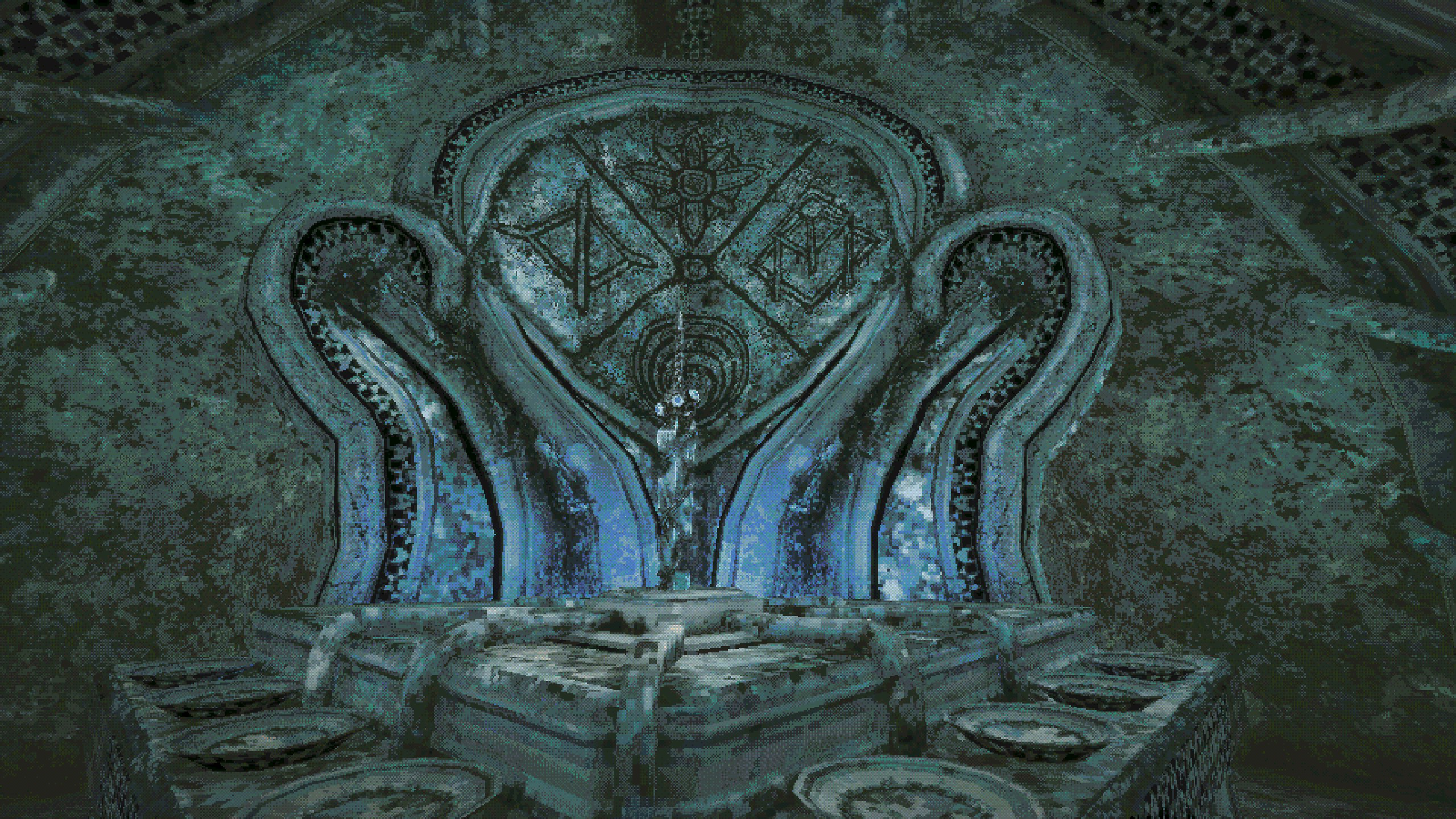
Ending 4: consumption without satisfaction
After the skull ritual, Beruim can consume Sipeha. The final image presents his altered eyes and dark-stained face and hands, while the text states that his hunger for god-flesh remains unsatisfied and the world may descend into chaos. The possibility of danger moves from the defeated adversary to the victorious protagonist. [51, 52, 276]
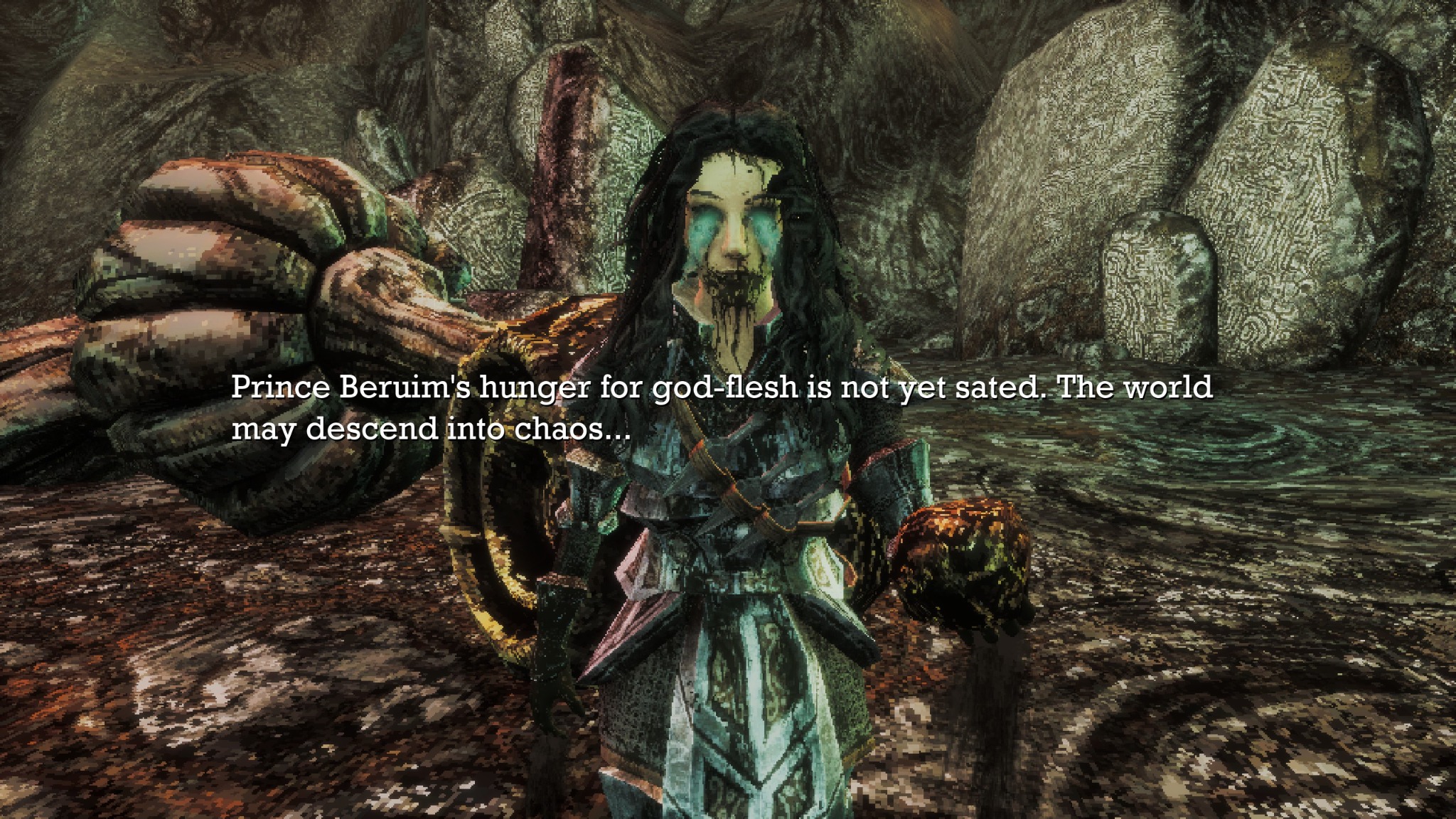
The ritual prepares Beruim for consumption before he reaches Sipeha. His final transformation completes that sequence: an earlier initiation becomes an act of divine consumption, followed by continuing hunger. Whether that appetite belongs to a newly acquired power or to another influence remains unresolved. [4 sources]
Possible futures
After an ending, Beruim awakens having glimpsed one possible future; after all four, the message refers to all possible futures. The return to the beach allows him to continue the journey. This framing presents the outcomes as visions of what his choices and discoveries may bring about. [277, 278, 279]
The fourth route demands a further discovery, but its outcome is more dangerous rather than more hopeful. The act beyond defeating Sipeha introduces a new threat through Beruim himself.
The narrative progression
Read together, the endings represent deeper levels of intervention: failing against the ruler, defeating the ruler, confronting the power behind the ruler, and finally consuming that power. Knowledge and strength increase, but wisdom and safety do not necessarily increase with them. [4 sources]