
08 / Factions
The Orbewa: a dynasty, a hidden succession, and stolen futures
In this chapter 5 sections

One people, several historical layers
Orbewa history spans several eras. Ojjama's kingship and cooperation with Epha belong to antiquity, while their emergence onto the surface occurs only a few centuries before Beruim's adventure. The Ancient World's vermilion inhabitants descend from those who remained below. Their ancestors understood machinery that the descendants can no longer operate. [13, 12, 38]
The Epha honored their Orbewa alliance with a weapon gift, and the Garden's crowned stone homopiscia commemorate a joint undertaking. Dagoom's later rebellion therefore breaks with a history of cooperation as well as the treaty with Bamaen. [71, 77, 28]
Yubior's disappearance and Muagyo's pilgrimage
Public descriptions continue to call Yubior Jigeki's current avatar and place his last recorded journey beneath Obmuer roughly a decade before the adventure. Temple records instead say he died and Jigeki joined his priestess Muagyo. She mourned Yubior, whom she loved, but followed the god's path. The old avatar's body and the continuing god are explicitly different subjects of the story. [4 sources]
Muagyo leaves portions of the inner-sanctum key at shrines encountered on her pilgrimage: one in the mausoleum, one far below near Siraatsu's bridge, and one beneath Puwema's temple. She then travels overseas while the congregation continues its work in the sealed sanctum. These inscriptions turn an access puzzle into a record of mourning and expanding religious power. [4 sources]
The crown left at the apparent grave and a key fragment's expression of longing reinforce Muagyo's private grief. Her pilgrimage begins in bereavement, even as her subsequent influence on Dagoom turns toward political domination. [224, 225, 15]
The Academy's suppression and the expedition that tests it
The Royal Academy continues to venerate Yubior and suppresses Muagyo's status. Irdunuub's enemy entry says this helps the congregation conceal its rituals. The motive for the Academy's decision is unknown, but its consequences reach well beyond the public record. [14]
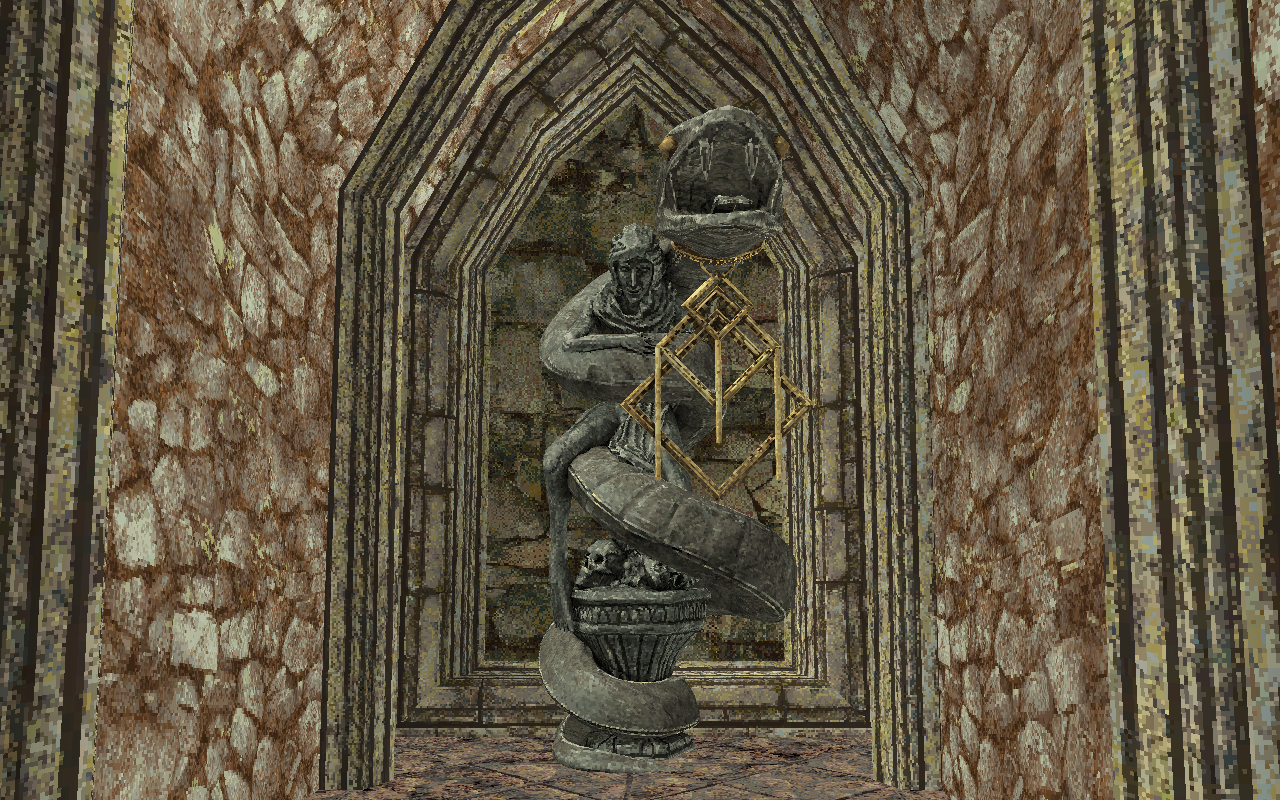
Piodor and a companion independently investigate the claim that Jigeki's avatar is now Orbewa, knowing the Academy will call it heresy without evidence. They find an apparent grave and the statue of an Orbewa woman bearing Jigeki's symbol. A hired porter, outraged by their supposed blasphemy, throws himself overboard with an oar. After the investigators reach their discovery, the water recedes and does not return; they run out of food while Piodor worships the statue and repeats the name Muagyo from a dream. The diary ends without a confirmed rescue. [4 sources]
Their story is a compact tragedy about uncovering a truth without possessing the means to survive the discovery. It also corroborates the conflict between official doctrine and the temple's evidence from a perspective outside the prince's main quest.
Dagoom, Irdunuub, and Erma
Dagoom is the reigning Sea King, persuaded by Muagyo to break the pact with Bamaen. She promises that becoming Jigeki’s avatar will give her the power to help Dagoom establish Orbewa dominion. Irdunuub is the high priestess serving Muagyo’s congregation, while Erma is the imprisoned mother whose eggs that congregation stole. Their stories expose conflicts of ambition, worship, and vulnerability within Orbewa society. [15] [14] [230] [208]
The restored eggs create a brutal reversal. Erma's first hatchling destroys every remaining egg to ensure that it alone can become the next Sea King. Its entry says Jigeki's influence had already entered the egg. The promise of future rule that helps corrupt Dagoom reappears in the hatchling's refusal to tolerate rivals. [15, 209]
A religion with conflicting adherents
Okmaru and her traveling companion visit Jigeki's shrine and take a key fragment. The companion wishes also to honor Puwema as Jigeki's counterpart; Okmaru despises her. Their disagreement documents different religious interpretations within the same pilgrimage. A giant fish later swallows Okmaru and the fragment, turning the key's location into the remains of a specific failed journey. [164, 231, 232]
The pilgrimage records preserve differing accounts of the gods' relationship. Fertility and decay can be understood as complementary parts of life even while their followers remain in conflict.